What Foods Should You Avoid With Braces?
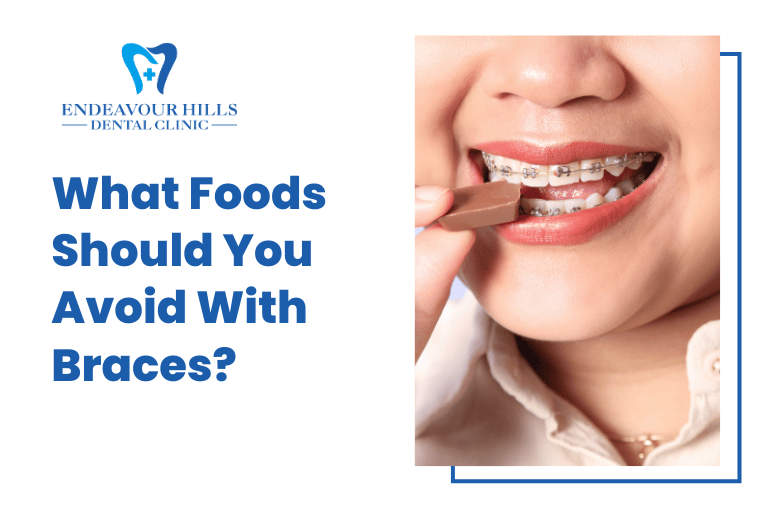
When you have braces, the main foods to avoid are hard, sticky and very chewy foods. They can loosen brackets, bend wires or become difficult to remove from around your braces.
You do not need to avoid every crunchy or firm food. Foods such as apples and carrots can often still be eaten if you cut them into smaller pieces instead of biting into them whole.
The key is to avoid foods — and ways of eating them — that put unnecessary pressure on your braces.
Foods to Avoid With Braces at a Glance
| Food Type | Examples | Why Avoid It? |
| Hard foods | Hard lollies, ice, nuts | Can damage brackets or wires |
| Sticky foods | Toffee, caramel, chewy lollies | Can stick to and pull on braces |
| Very chewy foods | Tough or very chewy foods | Can put extra pressure on braces |
| Foods you bite into | Whole apples, corn on the cob | Can put force on front brackets |
| Hard snacks | Popcorn kernels, hard crackers | Can damage braces when bitten |
Some of these foods can still be eaten if you change how you prepare them. Others are better avoided until your braces come off.
Why Can Certain Foods Damage Braces?
Braces are designed to apply gentle, controlled pressure to your teeth. However, brackets and wires can be damaged by excessive force.
Biting into very hard foods can loosen a bracket or bend a wire, while sticky and chewy foods can pull on the braces or become trapped around them.
If part of your braces becomes damaged, it may need to be repaired before treatment can continue as planned.
Hard Foods to Avoid With Braces
Very hard foods are best avoided because of the pressure they can place on brackets and wires.
These include:
- hard lollies
- ice
- whole nuts
- hard crackers
- hard taco shells
- unpopped popcorn kernels
Be particularly careful with foods that can contain unexpectedly hard pieces. Popcorn, for example, may contain unpopped kernels that are hard enough to damage braces, while pieces of husk can become trapped around the brackets or gums.
Sticky and Chewy Foods to Avoid
Avoid sticky and very chewy foods such as:
- toffee
- caramel
- gummy lollies
- chewy sweets
- other sticky confectionery
These foods can pull on brackets and wires while you chew and can be difficult to remove once they become caught around your braces.
Foods You Can Eat If You Prepare Them Differently
Having braces does not mean that every firm or crunchy food has to disappear from your diet. In many cases, changing how you prepare the food is enough.
For example:
- slice apples and pears instead of biting into them whole
- cut raw carrots into small pieces or cook them until softer
- remove corn from the cob
- cut crusty bread into manageable pieces
- cut meat away from the bone rather than biting directly from it
- cut firm foods into smaller bites and chew them with your back teeth
The aim is to reduce the amount of force placed directly on your brackets, particularly those attached to your front teeth.
What About Common Snacks and Foods?
Some foods fall into a grey area. They are not necessarily off-limits, but you may need to choose the type carefully or change how you eat them.
Can You Eat Chocolate With Braces?
Soft chocolate is generally easier to eat than hard or sticky confectionery.
Be more careful with chocolate containing hard nuts, toffee, caramel or other chewy fillings. These additions can make an otherwise soft food much harder on your braces.
Can You Eat Chips With Braces?
Some chips can be quite hard and crunchy. If you eat them, avoid biting down forcefully on very hard pieces.
Softer snacks are generally easier on braces, particularly just after an adjustment.
Can You Eat Pizza With Braces?
Most pizza can be eaten with braces, but very hard or chewy crusts can be more difficult.
Cutting pizza into smaller pieces can make it easier to eat without pulling or biting heavily with your front teeth. You can also leave particularly hard crusts rather than trying to chew through them.
Can You Eat Popcorn With Braces?
Popcorn is one of the foods better avoided.
The main problem is not necessarily the soft popcorn itself. Unpopped or partly popped kernels can be extremely hard, and biting one unexpectedly can damage a bracket or wire. The thin husks can also become trapped around your braces or gums.
Can You Eat Nuts With Braces?
Whole hard nuts can put considerable pressure on brackets and are best avoided.
If nuts are part of your normal diet, softer alternatives such as smooth nut butter may be easier to eat without placing the same pressure on your braces.
What Should You Eat After Getting Braces or Having Them Adjusted?
Your teeth may feel tender after braces are first fitted or after an adjustment. During this time, even foods that are normally safe with braces may feel uncomfortable to chew.
Softer options can include:
- yoghurt
- scrambled eggs
- mashed potato
- soup
- soft pasta
- rice
- smoothies
- soft fruit
- well-cooked vegetables
- tender fish
This does not mean you need to stay on a soft diet throughout treatment. Once the tenderness settles, you can usually return to a wider range of braces-friendly foods.
Are Sugary Foods Off-Limits With Braces?
Sugar does not usually damage brackets or wires in the way that hard or sticky foods can. The concern is what frequent sugary foods and drinks can do to your teeth.
Brackets and wires create extra areas where food and plaque can collect. If sugary foods or drinks are consumed frequently and the teeth are not cleaned thoroughly, the risk of tooth decay can increase.
This is particularly relevant with sticky sweets because they create two problems at once: they can pull on your braces and may remain around the teeth and brackets.
You do not necessarily need to eliminate sugar completely, but limiting frequent sugary snacks and drinks and cleaning your teeth properly is important while wearing braces.
Keeping Your Teeth Clean With Braces
Brackets and wires create extra places for food and plaque to collect, so careful cleaning becomes especially important throughout orthodontics.
Brushing twice a day and cleaning between your teeth daily helps remove plaque and food from areas that can be harder to reach with braces.
Pay particular attention to the areas around the brackets and along the gumline, where food can easily remain after eating.
What Should You Do If Food Damages Your Braces?
If a bracket becomes loose or a wire bends or breaks, contact a dental professional for advice. Avoid eating hard or chewy foods around the damaged area until it has been checked.
A loose or broken wire can sometimes irritate the inside of your mouth, so do not ignore it simply because it is not painful.
The Bottom Line
Eating with braces is less about following a long list of forbidden foods and more about avoiding unnecessary pressure on the brackets and wires.
Very hard, sticky and chewy foods are best avoided. Many other foods can still be enjoyed if you cut them into smaller pieces, cook them until softer or change the way you eat them.
A few practical changes to your everyday meals and snacks can help protect your braces while still allowing you to eat a varied diet throughout treatment.