What Happens During Dental Implant Surgery?
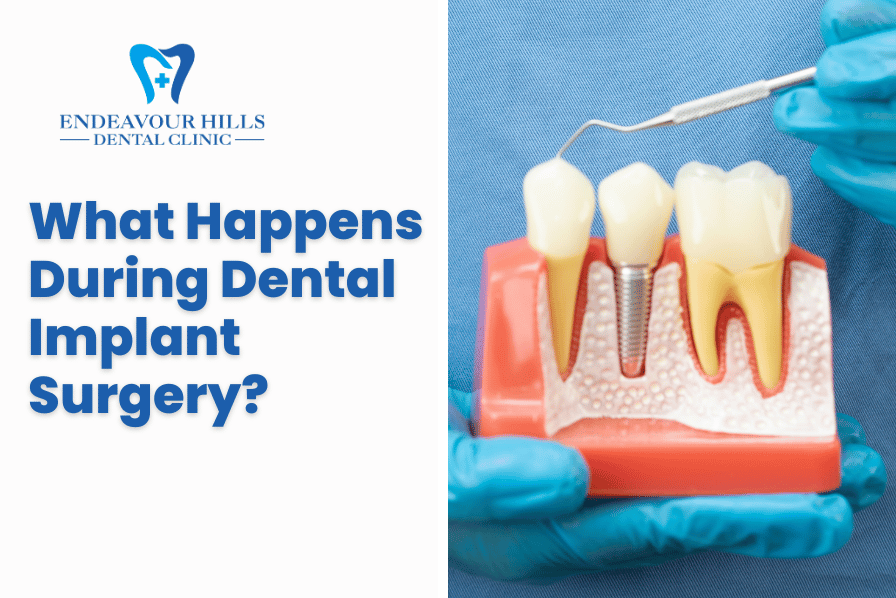
During dental implant surgery, a small implant is placed into the jawbone where a tooth is missing. The area is numbed with local anaesthetic, the implant is carefully positioned in the bone, and the gum is then closed or shaped around it.
However, the surgery is only one stage of dental implant treatment. The implant normally needs time to heal and become stable in the jawbone before the final replacement tooth is fitted.
Here is what happens before, during and after the surgery.
What Happens Before Dental Implant Surgery?
Before surgery, your dentist needs to make sure that an implant is suitable for you and plan where it should be placed.
This usually involves examining your teeth and gums and taking dental X-rays or other scans. Your dentist will assess the area where the tooth is missing and check whether there is enough healthy jawbone to support the implant.
Your general health also matters. Tell your dentist about any medical conditions you have and any medicines you take.
If there is not enough bone to support the implant, an additional procedure such as bone grafting may sometimes be needed.
The right approach depends on your jawbone, gum health and the number of teeth being replaced. Your dentist will use this information to plan the most suitable dental implant treatment for your needs.
What Happens on the Day of Dental Implant Surgery?
Dental implant placement is usually performed under local anaesthetic. This numbs the area being treated so you should not feel pain while the implant is being placed.
Once the area is numb, the dentist makes a small opening in the gum to reach the jawbone. A space is then carefully prepared in the bone for the implant.
The implant, which is usually made from titanium, is carefully placed into the prepared space in the jawbone. It acts as a replacement for the root of the missing tooth.
Once the implant is in position, the gum may be closed with stitches or shaped around the implant, depending on the treatment plan.
Will Dental Implant Surgery Hurt?
Local anaesthetic is used during the procedure, so you should not feel pain while the implant is being placed. You may still notice some pressure or movement while the dentist is working.
Once the anaesthetic wears off, some soreness and swelling can occur. How much discomfort you experience can depend on the complexity of the procedure and whether any additional treatment was needed.
If this is one of your main concerns, our guide to whether dental implant treatment is painful explains what you may experience during and after the procedure.
Will You Have a New Tooth Straight Away?
Not always.
The implant placed during surgery is not the visible replacement tooth. It sits inside the jawbone and provides a foundation for the future crown, bridge or denture.
After the implant is placed, the surrounding bone needs time to heal and become firmly connected to it. This process is known as osseointegration.
Healing after dental implant placement can take several months, although the exact time varies from person to person.
Depending on your treatment, you may have a temporary tooth while the implant heals. In other cases, the area may be left to heal before the next stage begins.
What Happens After the Implant Has Healed?
Once the implant is stable in the jawbone, your dentist can move on to replacing the visible part of the missing tooth.
A small connector called an abutment is attached to the implant. A crown can then be attached to the abutment when a single tooth is being replaced. Other types of restorations may be used when several teeth are being replaced.
This is why dental implant treatment usually involves several stages rather than one appointment. The surgery places the implant in the jawbone, while the replacement tooth or teeth are completed later.
What Can You Expect Immediately After Surgery?
Some discomfort, swelling, minor bleeding or bruising can occur once the local anaesthetic wears off.
Your dentist will give you instructions for looking after the area while it heals. This may include advice about keeping the area clean, what to eat and how to manage discomfort.
Following these instructions is particularly important during the first few days of dental implant recovery.
Does Everyone Have the Same Implant Surgery?
No. The basic purpose is the same — placing an implant securely into the jawbone — but the exact procedure can vary.
Your treatment may be different if you:
- need more than one implant
- need a tooth removed before implant placement
- do not have enough bone to support the implant
- need a bone graft
- are replacing several teeth rather than a single tooth
Some additional procedures can be performed at the same time as implant placement, while others may need to be completed earlier.
Before treatment, your dentist should explain which stages apply to you, along with the expected benefits, possible risks and other treatment options. Understanding these points is an important part of giving informed consent before treatment.
How Long Does Dental Implant Treatment Take?
The surgery itself is only one part of the total treatment time.
After the implant is placed, the jawbone needs time to heal around it and create a stable foundation for the replacement tooth. The entire process can therefore take several months.
Treatment may take longer if you need a tooth extraction, bone graft or another procedure before or during implant placement.
Your dentist can give you a clearer idea of the timeline after examining your mouth and planning your treatment.
When Should You Contact Your Dentist After Surgery?
Some pain, swelling and minor bleeding can occur after dental implant surgery and should gradually improve.
Contact your dentist if you are concerned about your recovery, particularly if you have severe or increasing pain, persistent bleeding, signs of infection or an implant that feels loose.
Following your dentist’s instructions and attending follow-up appointments allows the implant and surrounding area to be checked as they heal.
The Bottom Line
Dental implant surgery involves placing an implant into the jawbone to replace the root of a missing tooth. Local anaesthetic is usually used during the procedure, and the implant is then given time to heal and become stable in the bone.
Once healing is complete, the replacement tooth or teeth can be attached.
If you are considering an implant, a dental consultation at Endeavour Hills Dental Clinic can help determine whether the treatment is suitable for you and what steps may be involved.
More Useful Resources:
- Wisdom Teeth Removal Surgery: What to Expect
- What’s an Implant-Retained Bridge? Here’s What You Need to Know
- What are All-on-4 Dental Implants?
- How Dental Implants Compare to Dentures in Comfort
- Dentures vs Bridges vs Implants: What is Best For You
- Dental Implant Recovery: Timeline, Tips and What to Avoid